

From Historical Bookkeeping to Forward Telemetry
Historically, personal financial management and enterprise cash management suffered from the same core limitation: they were purely retroactive. You opened your bank ledger at the end of the month only to discover where capital had already leaked. Traditional budgeting apps merely digitized this rearview mirror approach.
Today, the convergence of Open Banking regulations (such as PSD2 in Europe and CFPB Section 1033 in the United States) with time-series machine learning has unlocked Predictive FinTech. Instead of asking what you spent last month, intelligent financial engines forecast your cash position 30, 60, and 90 days into the future with remarkable precision.
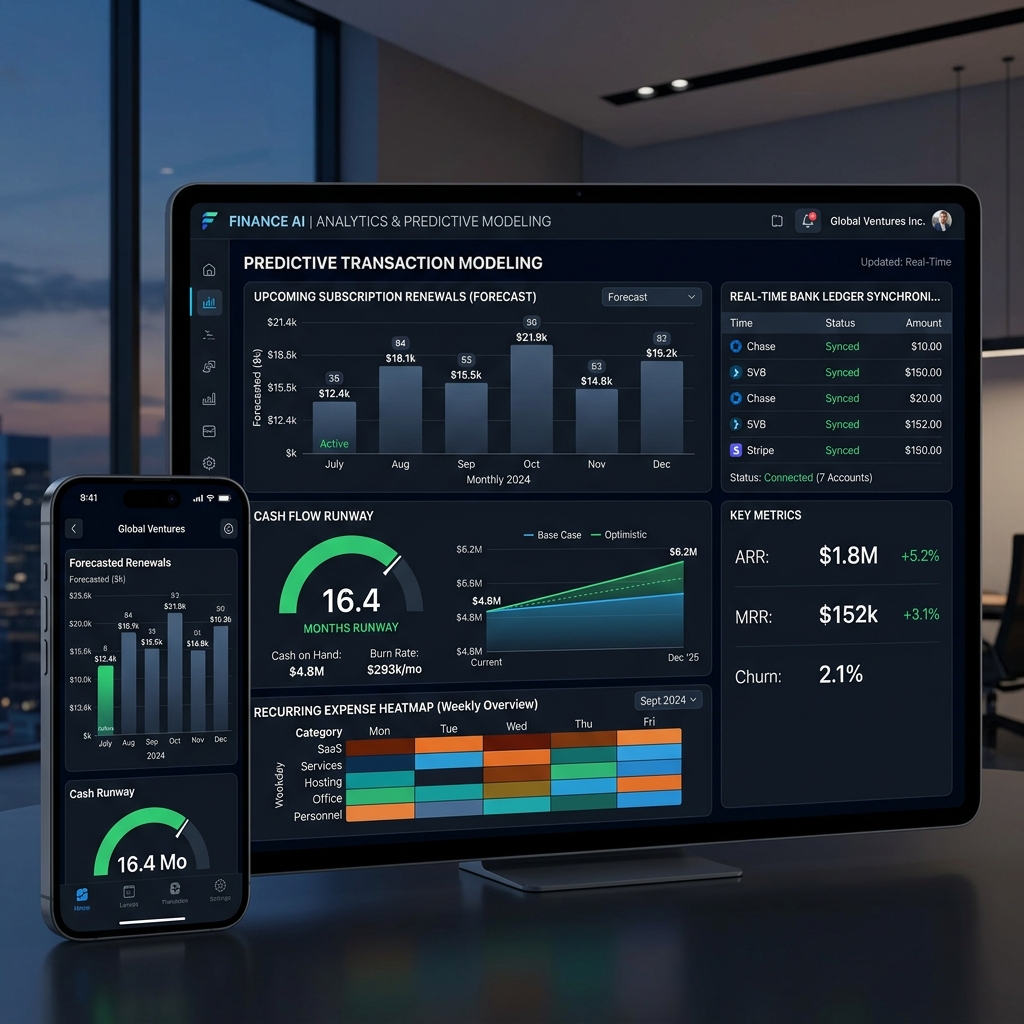
The Mechanics of Predictive Transaction Modeling
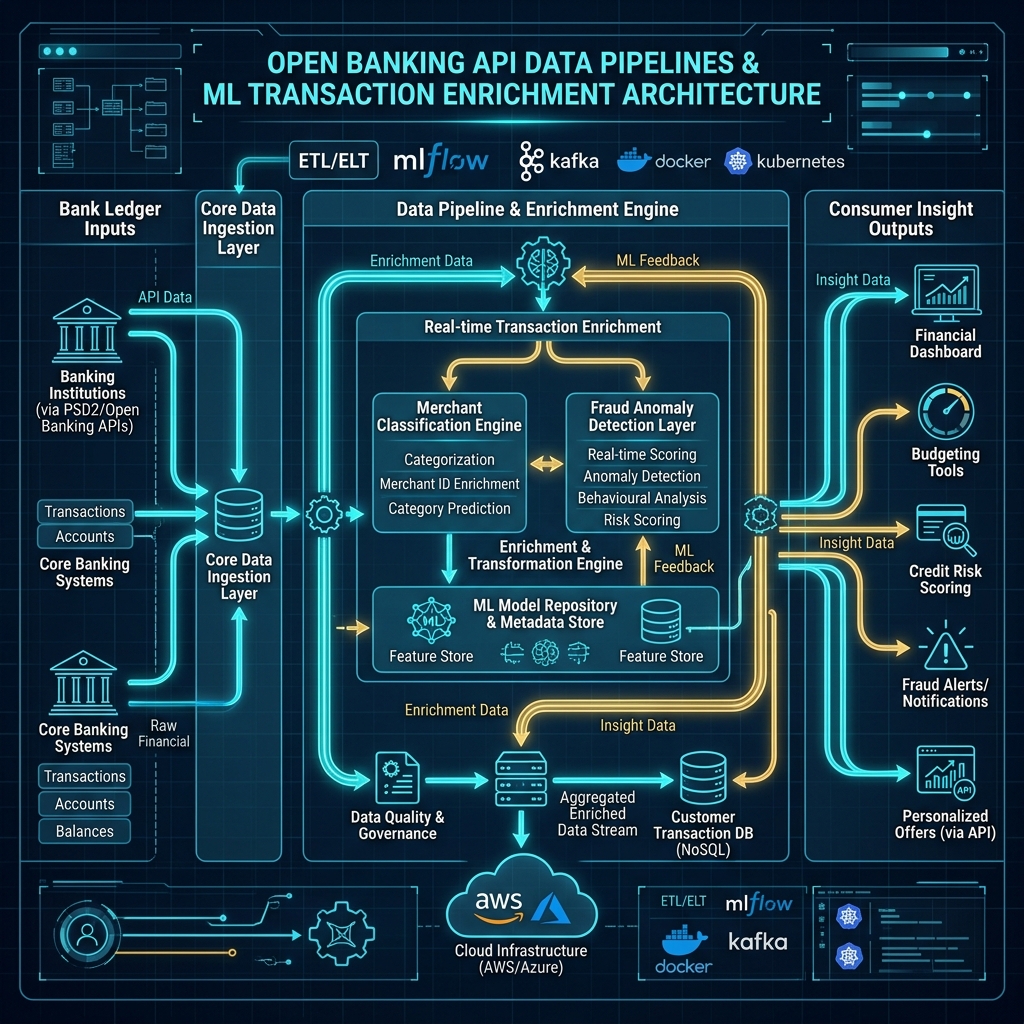
Predicting human and corporate financial behavior requires far more than basic linear regression. State-of-the-art predictive spending engines orchestrate three core architectural stages:
- Semantic Merchant Enrichment: Raw bank transaction strings (e.g.,
SQ *AMZN MKT 49208 WA) are messy and uninformative. Machine learning classifiers clean, tokenize, and categorize these descriptors in real time, mapping them to exact corporate entities, recurring subscription intervals, and tax categories. - Non-Linear Recurrence Detection: Not all recurring expenses follow neat monthly schedules. Quarterly insurance premiums, annual software seat renewals, and seasonal utility surges are automatically extracted and modeled into dynamic baseline projections.
- Contextual Volatility Forecasting: By correlating historical spend velocity with calendar events, payroll schedules, and discretionary habits, algorithms predict upcoming cash compression zones before liquidity dips below critical thresholds.
Enterprise Implications: Corporate Treasury & Zero-Latency Working Capital
While consumer applications like Cleo, Monarch, and Plum popularized conversational financial budgeting, the enterprise value proposition is enormous. CFOs and treasury teams increasingly deploy predictive FinTech platforms to optimize working capital:
- Automated Working Capital Buffers: Algorithms dynamically calculate optimal treasury allocations, shifting idle cash into yield-bearing overnight funds without risk of overdrafting operational accounts.
- Real-Time Spend Anomaly Interception: Catching rogue SaaS subscriptions, duplicate vendor billing, or unauthorized procurement orders milliseconds after transaction initiation rather than during end-of-quarter audits.
- Autonomous Vendor Negotiations: Cross-referencing enterprise spend data across global benchmarks to prompt automated contract renegotiations well before autorenewal lock-in dates.
The Future of Autonomous Financial Architecture
We are transitioning from informative financial dashboards to fully autonomous financial agents. In the next evolution, predictive AI will not merely warn you of an impending deficit-it will proactively adjust automated transfers, renegotiate terms, and secure micro-liquidity facilities behind the scenes. In both consumer tech and global corporate finance, predictive intelligence is turning money management from a reactive burden into an automated strategic advantage.